

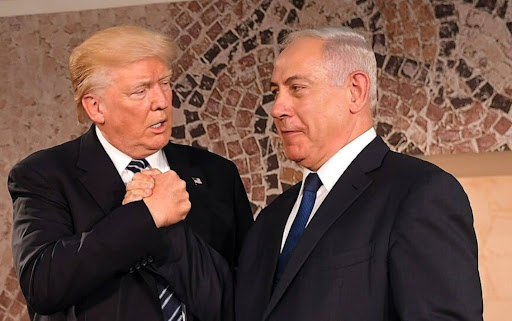
A quiet but significant shift has taken place in US President Donald Trump’s public statements about Iran: he has pulled back from earlier hints about supporting a popular uprising to topple the Iranian government. Where Trump once suggested that Iranians might soon have the chance to choose new leadership, he now describes such an outcome as “a very big hurdle” — a tacit acknowledgment that regime change may not be a realistic goal. The shift places him at odds with Israeli Prime Minister Benjamin Netanyahu, who has continued to frame the war as an opportunity to transform Iran’s government and the broader Middle East.
The contrast between the two leaders’ visions has been thrown into sharper focus by a recent dispute over Israel’s strike on Iran’s South Pars gas field. Trump said publicly that he had warned Netanyahu not to carry out the attack. Netanyahu confirmed Israel acted alone but agreed not to repeat the move. The incident exposed strategic divergences that US officials have since worked to downplay, with limited success.
Netanyahu’s goals remain ambitious and expansive. He has described the ongoing conflict as a generational opportunity to reshape the Middle East, and he enjoys strong domestic support in Israel that allows him to sustain a long campaign. His domestic political position gives him room to press ahead even in the face of American pushback — a dynamic that complicates Washington’s ability to set the pace and scope of the war.
Trump’s position, by contrast, has narrowed considerably. His primary stated objective — preventing a nuclear-armed Iran — is specific, definable, and potentially achievable without full Iranian regime transformation. When asked whether he supported Netanyahu’s calls for Iranians to rise up, Trump was skeptical. “I think it’s a very big hurdle,” he said, adding that he expected Netanyahu to understand the same thing.
Tulsi Gabbard’s congressional testimony captured the divergence officially, noting that the two leaders have articulated different objectives. On the battlefield, those differences manifest as distinct military approaches: the US targeting nuclear sites and missile systems, Israel carrying out assassinations and broader destabilization operations. How long the two governments can sustain a joint campaign built on different definitions of success remains an open — and increasingly pressing — question.
