

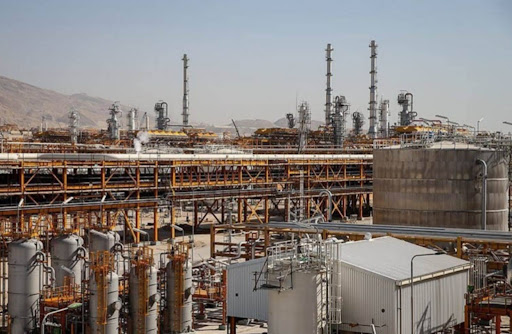
An energy war erupted in the Gulf on Wednesday after Iran’s Revolutionary Guards announced it would strike refineries and gas facilities across Saudi Arabia, the UAE, and Qatar within hours, following Israeli missile attacks on the South Pars gasfield. The announcement was backed by specific target names and evacuation orders, giving it an air of seriousness that went well beyond typical wartime rhetoric. Global oil prices surged toward $110 a barrel.
South Pars is not just Iran’s largest gasfield — it is the world’s largest natural gas reserve, shared with neighboring Qatar. The Israeli decision to attack it, reportedly with US approval, marked a clear policy shift. Until now, both Washington and Tel Aviv had deliberately avoided targeting Iranian oil and gas infrastructure, understanding that doing so risked triggering catastrophic global energy price increases and wider regional destabilization.
Iran’s state media named Saudi Arabia’s Samref refinery, Jubail complex, the UAE’s al-Hosn gasfield, and Qatar’s Mesaieed and Ras Laffan facilities as targets. The warning was broadcast publicly, giving residents and employees a narrow window to evacuate. Iran’s provincial governor in Asaluyeh called it the beginning of an inevitable and total economic war, blaming the US and Israel for crossing a critical line.
Oil markets responded with their sharpest single-session move in weeks. Brent crude climbed nearly 5% to $108.60, while European gas prices jumped more than 7.5% to over €55.50 per megawatt hour. Gulf oil exports had already fallen 60% from pre-war levels, a consequence of sustained drone and missile strikes and Iran’s stranglehold on the Strait of Hormuz. The threat of further damage to Gulf energy infrastructure added another dimension to an already severe supply crisis.
Qatar’s government warned that attacking energy infrastructure endangered global energy stability, regional communities, and the natural environment. With specific targets named, evacuation orders issued, and oil prices climbing, the situation had escalated to a degree that left little room for diplomatic resolution in the short term. The hours that followed were expected to define the next phase of the most consequential energy conflict the Gulf had seen in decades.
