

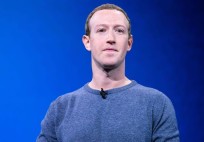
The metaverse is over, but its shadow is not. Meta has confirmed the shutdown of Horizon Worlds on VR — departing the Quest store in March, fully dark on June 15 — after close to $80 billion in losses. Mark Zuckerberg’s virtual world experiment has concluded, but its influence on how Silicon Valley thinks about vision, risk, and accountability will persist long after the last VR server goes offline.
The metaverse changed how technology investors and analysts evaluate platform bets. Before the metaverse, the general consensus in tech was that big bets required patience and that the founder who had built one generational platform should be trusted to identify the next one. The metaverse has complicated that consensus. Zuckerberg identified the right direction — immersive computing — but was wrong about the vehicle, the timing, and the form the transition would take.
Horizon Worlds served as the testing ground for the bet. It drew a few hundred thousand monthly active users, sustained years of development and marketing investment, and eventually confirmed what skeptics had argued from the beginning: the market was not ready, and forcing readiness through capital expenditure was not working. Reality Labs logged close to $80 billion in losses as evidence of that argument.
The layoffs of more than 1,000 Reality Labs employees in early 2025, combined with Meta’s formal AI pivot, brought the experiment to its close. The resources that had funded the metaverse are now flowing toward AI, and the organizational energy that had sustained the VR vision is being redirected toward models, tools, and AI-native products that already have commercial traction.
Silicon Valley’s relationship with failure is complicated — failure is celebrated in theory and punished in practice. The metaverse sits uneasily between those two postures. It was a genuine attempt to build something transformative. It failed commercially but not intellectually. And the question of how to evaluate that kind of failure — expensive, sincere, instructive — is one that Silicon Valley will continue debating long after Zuckerberg has moved on to his next chapter.
