
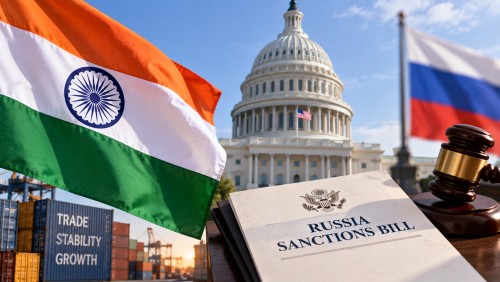
The United States House of Representatives’ recent passage of the Lindsey O. Graham Sanctioning Russia and Iran Act could significantly impact India’s trade dynamics, potentially imposing tariffs as high as 100% on countries that continue substantial oil trade with Russia. India, a key consumer of Russian crude, is now strategizing to safeguard its economic interests amidst these potential sanctions.
India’s Ministry of External Affairs has affirmed its commitment to ensuring energy security for its population of 1.4 billion, emphasizing a diversified approach to energy sourcing in response to shifting market conditions. In recent months, India has expanded its energy imports to include sources like the United States and Venezuela, highlighting its proactive measures to diversify its energy supply chain.
The proposed legislation, having already cleared the US Senate, awaits presidential approval before becoming law. If enacted, it could also affect other nations such as China, Slovakia, Hungary, and Azerbaijan, all of which maintain significant trade relations with Russia. The Indian government has proactively engaged with US officials at senior levels to discuss the potential repercussions of these sanctions and is preparing to collaborate with domestic trade and industry bodies to mitigate any adverse economic impacts.
The potential tariffs have raised concerns about their effects on India-US trade relations and the broader global energy markets. India’s reliance on Russian oil remains substantial, and the possibility of hefty tariffs could necessitate further adjustments in its trade policies and energy procurement strategies.
As the situation develops, India continues to navigate the geopolitical landscape, balancing its energy requirements with international diplomatic and economic pressures. The outcome of these proposed US sanctions will likely influence future trade policies and energy partnerships for India and other affected nations.