
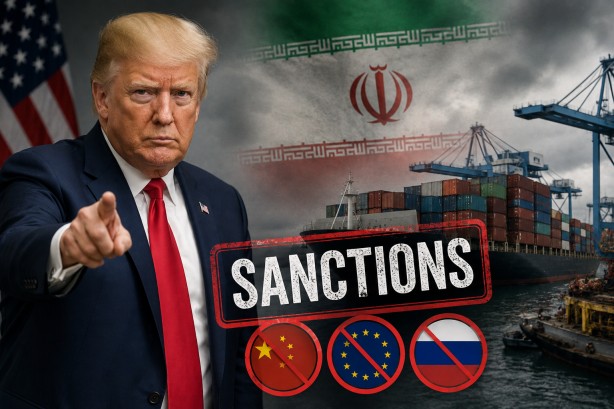
The United States has issued a stern warning of severe sanctions against nations and businesses engaged in economic activities with Iran. This move is part of Washington’s intensified strategy to sever Tehran from global financial resources. US Treasury Secretary Scott Bessent emphasized that the campaign will focus on entities involved in transactions aiding Iran’s revenue generation, particularly those facilitating sales of Iranian oil or engaging in financial dealings. Countries and companies that persist in their trade relationships with Tehran may face deadlines to cease these interactions or encounter US-imposed sanctions.
This development has sparked apprehension over a potential clash with China, Iran’s principal trading partner and a substantial purchaser of its oil. Beijing has resisted the US’s pressure campaign, advocating instead for political and diplomatic resolutions rather than economic sanctions. Meanwhile, Iran has also issued threats of retaliation against countries taking part in the US-led initiative, suggesting possible responses could include military or cyber operations.
The new US measures arise amidst ongoing tensions concerning Iran’s nuclear program and the strategic Strait of Hormuz, a vital passage for global energy shipments. The United States has employed economic restrictions to curb Iranian oil exports, while Iran has exerted its own pressure on shipping activities through this critical waterway. The US maintains that its economic campaign aims to compel Tehran to alter its course following the ineffectiveness of military interventions in achieving broader objectives. Nonetheless, US officials indicate that additional military action remains within the realm of possibilities.
The threat of sanctions has already begun to impact Iran’s trade relations, evidenced by the United Arab Emirates’ recent decision to suspend trade ties. Turkey, another key trading ally of Iran, has yet to declare its stance or response to the latest US actions. As the situation develops, the global community watches closely for shifts in diplomatic and economic alignments prompted by these US-led pressures.