
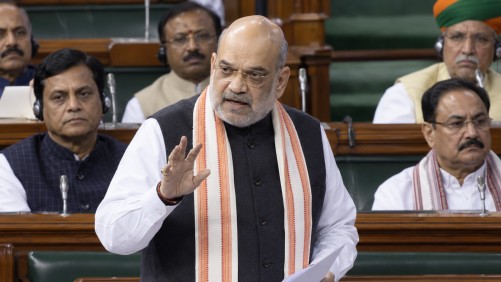
Union Home Minister Amit Shah has expressed the Bharatiya Janata Party’s (BJP) willingness to hold a special parliamentary session to address the Opposition’s accusations of vote theft. Speaking at a BJP state working committee meeting in Lucknow, Shah challenged Congress leader Rahul Gandhi and Samajwadi Party leader Akhilesh Yadav to substantiate their claims against the Election Commission in Parliament, which he described as unfounded.
Shah’s comments come in the wake of planned protests by the Opposition against Chief Election Commissioner Gyanesh Kumar. These demonstrations include a symbolic public impeachment and a significant rally at Delhi’s Ramlila Ground, aimed at highlighting perceived threats to democratic institutions. The INDIA bloc, a coalition of opposition parties, had initially intended to hold the symbolic event at Congress president Mallikarjun Kharge’s residence but postponed it due to adverse weather conditions.
The Opposition has criticized the Election Commission’s Special Intensive Revision of electoral rolls, arguing that this process may disproportionately impact voters and favor the ruling BJP. In response, Shah accused the Opposition of resorting to street protests instead of engaging in parliamentary debate, asserting that their allegations emerged as a reaction to electoral losses rather than genuine concerns over electoral integrity.
Shah also took the opportunity to critique the electoral performance of both the Congress and Samajwadi Party, suggesting that their leaders blame the Election Commission instead of accepting defeat. He defended the BJP’s political record, positioning the party as committed to democratic processes and open to discussions in Parliament.
The confrontation between the BJP and the Opposition over these allegations underscores ongoing tensions regarding electoral processes and the integrity of democratic institutions in India. As the situation develops, the willingness of both sides to engage in parliamentary dialogue remains a critical factor in addressing these contentious issues.