
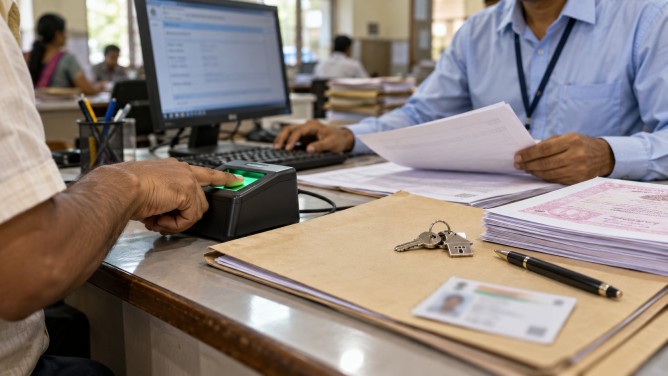
Starting October 1, Maharashtra has implemented a mandate requiring Aadhaar authentication for the registration of immovable property documents. This move, aimed at curbing fraud and enhancing identity verification, applies to 63 types of registrations, including property sales, purchases, mortgages, and partition deeds.
According to Revenue Minister Chandrashekhar Bawankule, the mandatory Aadhaar authentication is intended to reduce cases of impersonation, fake documentation, and unnecessary human intervention in the property registration process. The new system aims to make property registration more secure, transparent, and efficient.
For individuals who do not possess an Aadhaar number, the government has stipulated that they must provide proof of having applied for Aadhaar in addition to other government-issued identity documents. The submitted information will undergo verification before any transaction is finalized, ensuring that the identity of the parties involved is thoroughly authenticated.
Special provisions have been outlined for minors and certain eligible categories. For example, children without an Aadhaar number will still be able to access property registration benefits, and their lack of an identification number will not be a barrier to completing property registrations.
The Maharashtra government believes that these measures will bolster the integrity of the property registration system by making it more resistant to fraud and more accessible to legitimate registrants. These changes are part of broader efforts to ensure that property transactions are conducted with greater accountability and oversight.